National Recovery Month - Homelessness And Recovery
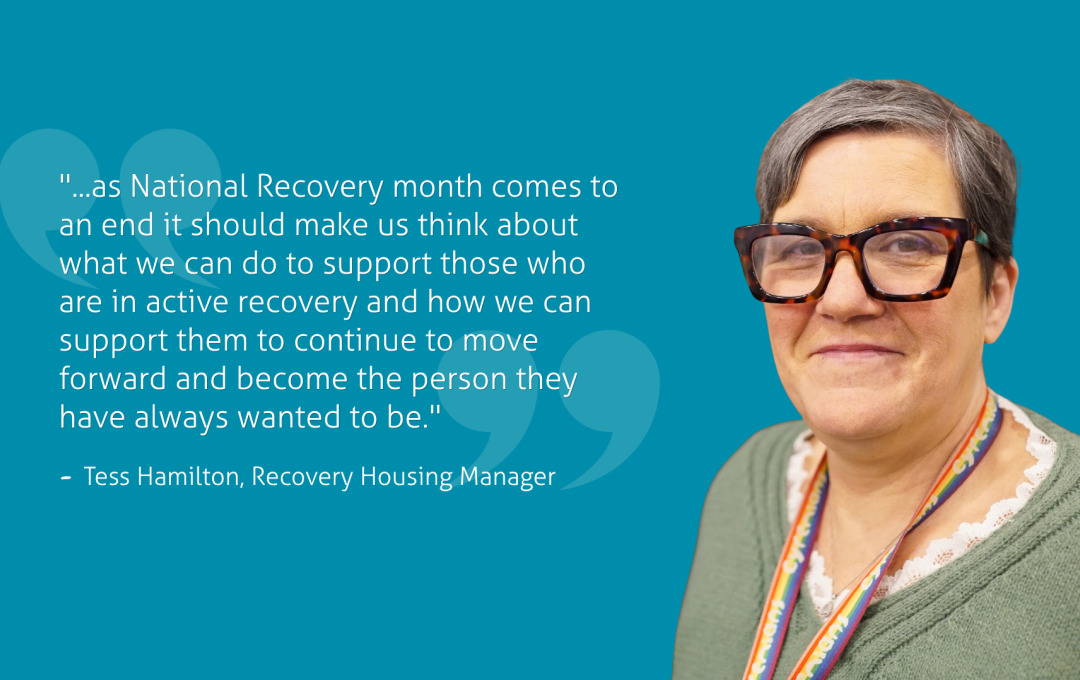
Tess Hamilton discusses her thoughts on homelessness and recovery, and the role Cyrenians plays in the lives of those in recovery across Edinburgh.
On a week where announcements across the political sector show that homeless and drug death numbers for Scotland have increased, I find myself thinking of those individuals and families who are mixed up in all of this.
My thoughts go to the individuals and families who are without a home, some of whom are rough sleeping, to those who have lost their lives and the families who will no longer see their faces, hear their voices, or be able to hold them again. The fact that the number of people rough sleeping before presenting as homeless has risen by 20% across Scotland and 1,133 lives that have been lost to drugs in the same year, is difficult to comprehend.
I look at the services that I manage knowing these numbers, and how these projects are a lifeline for those who are actively seeking, or are already in, recovery. One of these services is the housing support element of the LEAP Out of Hours residential rehab service. We support people who are going through the 12-week residential programme with the NHS, ensuring they feel safe and supported throughout their time with us so that recovery can be the main goal. We actively work to help them to look at their additional needs for when they leave LEAP which includes, for some, gaining a new housing situation so that their recovery can continue beyond the programme.
Whilst some of our reisdents do come to us from a position of stable accommodation, or with family and a safe place to return, those numbers are not as high as you might imagine.
A great number of those we support through LEAP are homeless with no fixed abode to return to after they leave the residential rehab, or are perhaps in untenable tenancies which can include cuckooed properties, some are in properties that are in a state of disrepair or live in an area which is filled with drugs and would make continued recovery next to impossible.
These are the individuals who the need more staff support while they are in treatment to look at their housing needs. It should be easy - helping people maintain their recovery feels like it should be the priority above all else, supporting both our communities and our NHS services. But that isn't the case at all. As the numbers show, we are short on temporary housing options - the resource simply doesn't exist. Further, if they have a current tenancy they can’t just give it up despite it not being fit for them to return to as this will then make them "intentionally homeless", and excludes them from additional housing support.
For our staff team this has meant needing to be more flexible, looking at additional options like supported accommodation, statutory homeless accommodation, or even other housing solutions that Cyrenians offer such as the Social Bite Village - but even those are limited. The worst case scenario in all of this is that we have people successfully completing 12 weeks residential rehab - for some people this is the first time clean and sober in their lives - and then returning them to a situation that sets them up to fail.
An example of 'thinking outside the box' when it comes to making sure there are appropriate housing solutions in place for people in this transition phase is our Foxglove Women's Recovery house.
Here we offer a safe place for women who have completed residential rehab, so it is part of the housing solution and allows women to feel safe and secure within a clean and sober living environment and gives them the space and time to recover well.
There are as few barriers to access as possible - and this is by design; you must be registered homeless and have been through a residential rehab. What is included in this project is not only accommodation but a support service that wraps around those who live there, a support service which looks at the whole person, supports them in their active recovery but also in those additional things that make a whole person. This includes their emotional wellbeing with a specially designed 14-week programme which includes recovery focused sessions, physical health and personal development skills to name a few.
By providing this 'go-between' space to rest and pause, people are much more likely to move on to independent living whilst, crucially, maintaining the recovery they've already fought so hard for.
So whilst I do look at these new stats with horror, I am also aware of the absolutely critical work my colleagues, and partners across the sector are accomplishing in the face of these staggering statistics. It is not enough to feel shocked by these numbers, we need to keep pushing forward for solutions that work, and more importantly, solutions that last.
For instance, we held a Lego workshop in partnership with ‘Build Recovery’ for 28 individuals who were currently going through the LEAP programme and those who are in the 2 recovery houses based in Edinburgh. This session helped them to work in groups, use their problem-solving skills and to even have some fun into the bargain. This also showed them that life although difficult at times could be different and that the learning of new skills is a great way to develop themselves further. It also helped them to think about what they could do in their future and although Lego isn’t going to change their lives it is out of the box thinking and that is what is needed. Now, having houses like the Womens recovery house aren’t going to fix the homeless or drug problem on their own but they are part of it and to those who use these services a vital part of support that is required. What we need is these kinds of projects upscaled to help more people and to help people see a different way of living.
So as Recovery month comes to an end it should make us think about what we can do to support those who are in active recovery and how we can support them to continue to move forward and become the person they have always wanted to be.