Cyrenians CEO responds to new Programme for Government
The solutions within yesterday’s Programme for Government are welcome and they look – at first glance – like they are the answer to Scotland’s housing emergency. But it also raises as many questions, as it does provide answers.
We need more social housing – the Scottish Government promises that thousands more social homes will be available by 2032. We need to look up stream and prevent homelessness before it happens – the Scottish Government has pledged £50 million pounds for prevention. We need supported accomodation, for those who need more than just a roof over their head – and the £2 million pledge to rollout Social Bite’s villages will help do that. All of this is fundamental to addressing one of Scotland’s most pressing problems – the number of children spending lengthy amounts of time in unsuitable temporary accomodation.
However – we must look at the context in which these promises are being made. Annual targets for building housing are being missed – and the 4.1 billion pledged for affordable housing falls significantly short of what Shelter Scotland have predicted will need to be spent to reach the social housing target.
The £50 million pledge for prevention, Cyrenians own ask, is a good start. But at present lacks detail about how, and where, that money will be targeted to make the biggest impact, and if that money will be available for grassroots organisations to continue their work long term.
It is promising to see that the Social Bite village – that Cyrenians has provided on-site support in Edinburgh for many years – will be replicated across the country. But is £2 million for supported accomodation enough for the historically high number of rough sleepers in Scotland who need this kind of supported accomodation on a long-term basis?
Public service reform was also at the top of agenda, with John Swinney pledging that public service delivery should be easily accessible, and citizen led. With so many of Cyrenians service users struggling to navigate complex systems, this is a worthwhile and necessary goal. But what use is accessible services – newly required duty to ‘Ask and Act’ if they think someone is homeless – if social housing is sparse, and preventative services are a postcode lottery?
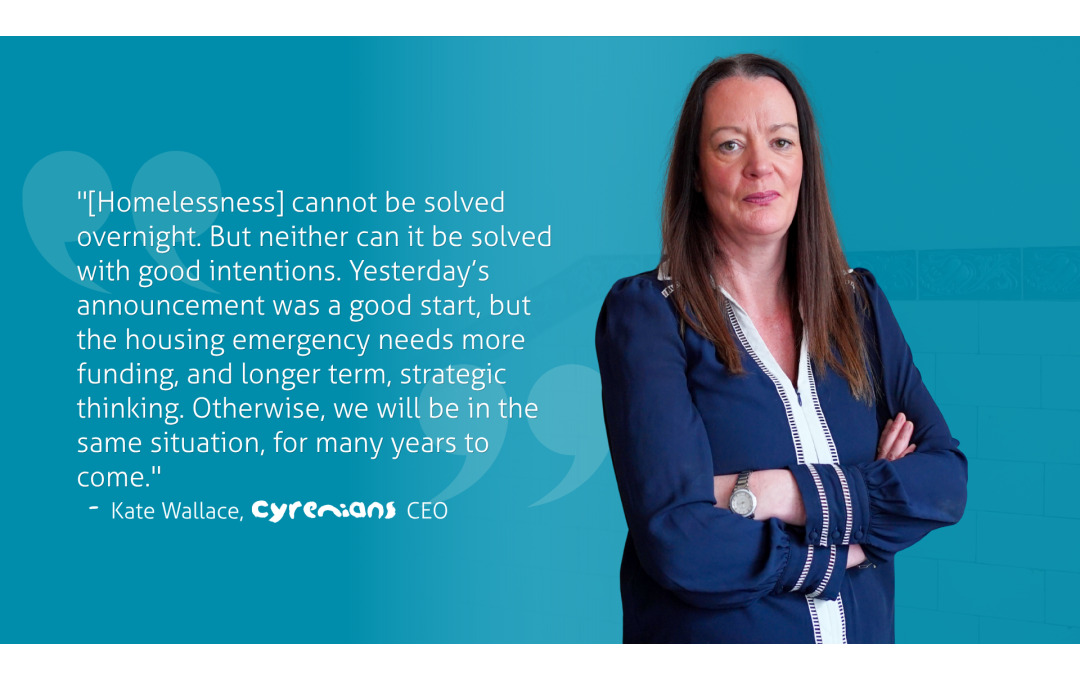
This problem cannot be solved overnight. But neither can it be solved with good intentions. Yesterday’s announcement was a good start, but the housing emergency needs more funding, and longer term, strategic thinking. Otherwise, we will be in the same situation, for many years to come.